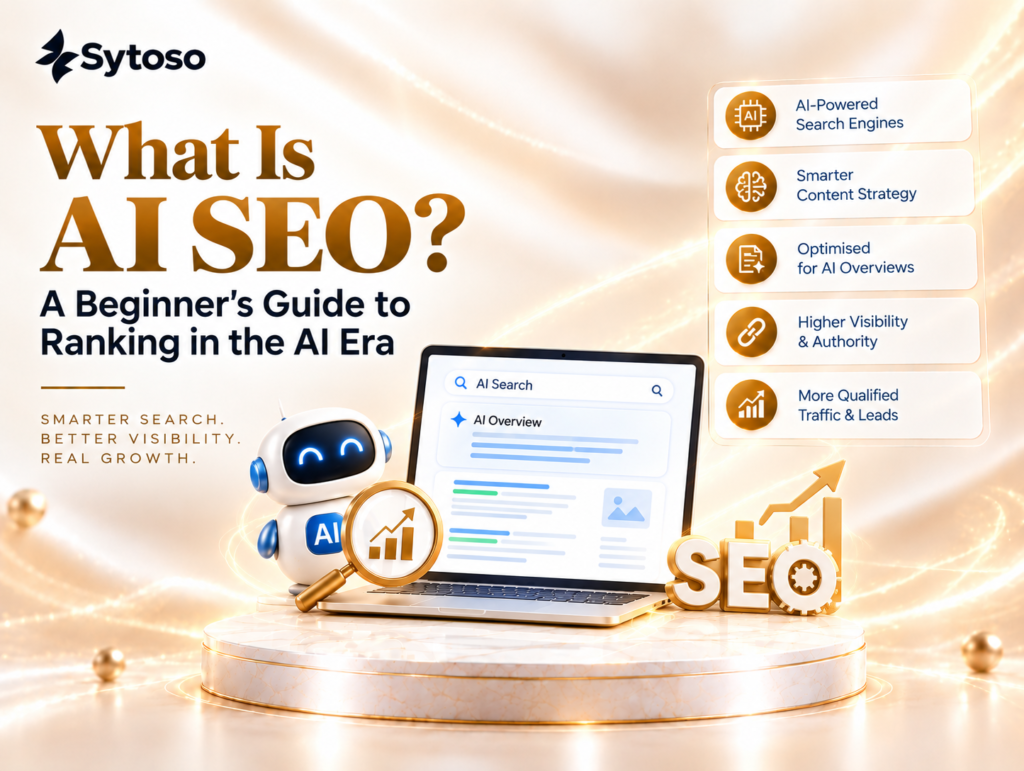
AI SEO (Artificial Intelligence Search Engine Optimization) uses AI tools and techniques to optimize content, keywords, and technical structure for modern search engines. It involves two key aspects: using AI to create and optimize content faster and optimizing content so AI search engines (like Google SGE/Overviews, ChatGPT, and Perplexity) can understand, trust, and rank your site.
Introduction
Search engine optimization is undergoing its biggest transformation since Google launched. Traditional SEO focused on placing keywords, earning backlinks, and structuring metadata for standard web crawlers.
Today, artificial intelligence has fundamentally changed both how search engines process information and how audiences search for answers. Welcome to the era of AI SEO—an approach that combines human creativity with machine intelligence to win top rankings.
Whether you manage your own site or partner with a specialized AI SEO agency to scale your organic growth, understanding AI search optimization is essential to staying visible today.
How AI Is Changing Search Engines
Search engines are no longer just indexing keywords; they are comprehending human intent. Understanding this shift helps explain why traditional SEO tactics alone are no longer sufficient.
1. From Keyword Matching to Intent Understanding
Modern search algorithms use Natural Language Processing (NLP) models to understand complex phrases, context, and conversational queries. Instead of exact-match keywords, search algorithms evaluate overall topic authority and contextual relevance.
2. Generative Search & AI Answers
Platforms like Google Search Generative Experience (SGE), Bing Copilot, and Perplexity present direct, generated answers at the top of search results. To rank inside these AI-generated snapshots, your content must offer clear, structured, and highly accurate information.
3. Predictive Personalization
AI algorithms analyze user history, device context, and behavior patterns to personalize search results in real time. Content must deliver immediate, actionable value to retain visitor engagement.
Core Strategies for Winning at AI SEO
To rank effectively in the AI era, implement these actionable strategies across your site:
┌───────────────────────────┐
│ Core AI SEO Pillars │
└─────────────┬─────────────┘
│
┌──────────────────────────────┼──────────────────────────────┐
▼ ▼ ▼
┌─────────────────┐ ┌──────────────────┐ ┌──────────────────┐
│ Target Answer │ │ Master E-E-A-T │ │ Technical Schema │
│ Engine │ │ (Experience & │ │ & Structure │
│ Optimization │ │ Trustworthiness│ │ For Crawlers │
└─────────────────┘ └──────────────────┘ └──────────────────┘
Strategy 1: Answer Engine Optimization (AEO)
Users increasingly ask conversational, long-tail questions (e.g., “What is the best budget laptop for video editing in 2026?”).
- Structure content around direct Q&A formats.
- Use clear subheadings (## and ###) that frame common user queries.
- Provide concise answers (20–40 words) immediately following subheadings to capture snippet placements.
Strategy 2: Focus Heavily on E-E-A-T
Google emphasizes Experience, Expertise, Authoritativeness, and Trustworthiness (E-E-A-T). Because AI can quickly generate generic content, original human experience is your primary competitive edge.
- Include original case studies, data, and personal insights.
- Highlight clear author credentials and expert citations.
- Avoid publishing unedited, purely auto-generated content.
Strategy 3: Optimize with Schema Markup
AI crawlers rely on structured data to parse web pages accurately.
- Use JSON-LD Schema for FAQs, articles, products, and organization details.
- Ensure site navigation, internal linking, and content hierarchies are logical and clean.
Best Practices for Using AI in Your SEO Workflow
AI tools like ChatGPT, Claude, and specialized SEO software can drastically speed up your strategy when used correctly.
Workflow Stage | How to Use AI Effectively | What to Avoid |
Keyword Research | Identify topic clusters and conversational long-tail queries. | Relying blindly on unverified keyword volume estimates. |
Content Drafting | Generate outlines, headlines, and initial rough drafts. | Publishing raw AI output without human editing. |
On-Page Optimization | Optimize meta descriptions, titles, and internal link suggestions. | Over-optimizing or keyword stuffing content. |
Technical SEO | Generate schema markup and debug site structure issues. | Ignoring manual code verification. |
Common Mistakes to Avoid in AI SEO
- Publishing Low-Quality Mass Content: Flooding your blog with hundreds of unedited AI articles leads to indexing penalties and ranking drops.
- Ignoring Fact-Checking: AI models can hallucinate facts or statistical figures. Always manually verify references and dates.
- Neglecting User Experience: Fast page speeds, clean design, and mobile responsiveness remain essential factors for keeping bounce rates low.
Conclusion: The Future of Ranking
AI SEO is not about outsmarting an algorithm with automated tricks; it is about delivering higher quality, better-structured value faster than ever before. By combining AI-assisted workflows with authentic human experience, original data, and clear structured markup, you can secure top rankings in the modern search landscape.
Frequently Asked Questions (FAQs)
What is the main difference between traditional SEO and AI SEO?
Traditional SEO primarily focuses on targeting specific keywords, building standard backlinks, and formatting metadata for traditional keyword-matching search crawlers. AI SEO, on the other hand, focuses on natural language processing (NLP), understanding search intent, optimizing for conversational queries, and earning visibility inside generative AI search results (like Google Overviews and ChatGPT).
Will Google penalize my site for using AI-generated content?
No, Google does not penalize content simply because it was created using AI. Google’s core stance rewards helpful, high-quality content regardless of how it is produced. However, if you publish unedited, low-quality, or spammy AI-generated content that lacks human insight, accuracy, and E-E-A-T, your rankings will suffer.
How can I get my website cited by AI search tools like Perplexity or ChatGPT?
To increase your chances of being cited by conversational AI engines, focus on deep topic coverage, clear definitions, original data, and structured formatting (such as bullet points and tables). AI bots look for authoritative, factual sources that provide direct answers with credible supporting evidence.
What tools do I need to start with AI SEO?
You don’t need a massive budget to start. Basic tools include large language models (like ChatGPT or Claude) for outlining and brainstorming, specialized SEO suites (like SurferSEO, SEMrush, or Ahrefs) for topic clusters, and free schema generators to implement structured data markup on your website.
Is technical SEO still important in the era of AI search?
Yes, technical SEO is more critical than ever. AI crawlers and automated bots depend heavily on clean site architecture, fast page load times, mobile-friendliness, and valid JSON-LD schema markup to easily crawl, parse, and index your content without running into roadblocks.